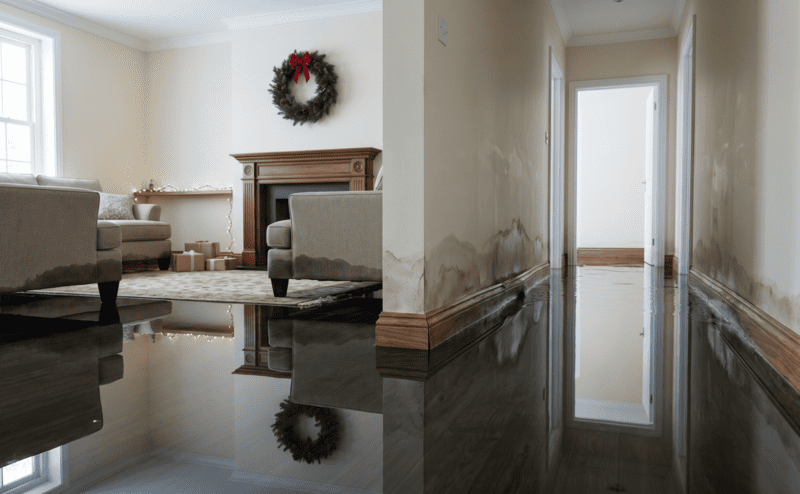
Every December, thousands of Honolulu residents head to the mainland or travel inter-island to spend the holidays with family — and every December, a portion of them return to a home that has been quietly flooding while they were gone. Water damage in a vacant home in Honolulu is among the most severe and costly restoration scenarios a homeowner can face, precisely because there is no one present to catch the early signs of a problem and call for help. A supply line that begins weeping on December 21st and goes unnoticed until January 2nd has eleven days to saturate flooring, walls, cabinetry, and ceilings — and in Honolulu’s warm, humid climate, that same eleven days is more than enough time for widespread mold growth to establish itself throughout the affected areas.
The Risks That Grow When No One Is Home
Several of the most common water loss scenarios are particularly dangerous in unoccupied homes. Water heaters are a leading culprit — a tank that has been slowly corroding for months may choose the holidays to finally fail, releasing its full contents and continuing to supply water until the line is shut off. Toilet supply lines and fill valves can fail or run continuously without anyone noticing the sound of running water that would normally prompt a quick investigation. In Honolulu’s rainy season, roof leaks that were minor during lighter rains may become active intrusions during sustained holiday storms, with water entering the structure day after day without being detected. Refrigerator ice maker lines — thin plastic tubing that degrades over time — are another underappreciated source of slow, continuous leaks that can go unnoticed beneath cabinetry for the entire duration of a holiday absence.
The damage timeline matters enormously. Within the first few hours of a water event, flooring and wall materials begin absorbing moisture. Within 24 to 48 hours in Honolulu’s climate, mold spores that are naturally present in any home environment begin to germinate in saturated materials. By day four or five, mold colonies are actively growing on drywall, wood framing, insulation, and soft furnishings. A homeowner returning after a week or more away may find not just a water damage scenario but a full mold remediation project layered on top of it — significantly expanding both the scope of work and the restoration cost. MD Restoration’s professional mold remediation team regularly responds to exactly these post-vacation scenarios, and early intervention after discovery is still far more effective than waiting to assess the full extent before calling.
Steps to Take Before You Leave Honolulu
The single most impactful thing a homeowner can do before leaving for an extended holiday trip is shut off the main water supply to the house or unit. For single-family homes, the main shutoff is typically at the meter near the street or at the point where the supply line enters the structure. For condominium residents, the in-unit shutoff — often located in a utility closet or behind the kitchen sink — will stop flow to all fixtures within the unit without affecting building supply. Shutting off the water does not affect water heater tanks that are already full, but it prevents any supply-line failure from continuously discharging water in your absence. It takes thirty seconds and eliminates the majority of plumbing-related holiday water loss risk entirely.
Beyond the water shutoff, a few additional steps significantly reduce risk during a Honolulu holiday absence. Asking a trusted neighbor, friend, or property manager to check the interior of the home every two to three days gives you an early-detection safety net for roof leaks, appliance failures, or anything the shutoff does not prevent. Ensuring gutters are clear before you leave reduces the risk of overflow directing water toward the foundation or through compromised fascia. And documenting your home’s condition with photos before departure — floors, ceilings, under sinks, behind appliances — creates a useful baseline if you need to file an insurance claim upon return.
What to Do If You Come Home to Water Damage
Returning to a water-damaged home after a holiday trip is disorienting and stressful, and the instinct to start cleaning up immediately is understandable — but the first call should be to a certified restoration professional, not to a mop. Photographing the damage before anything is disturbed protects your insurance claim, and professional moisture mapping will reveal the true extent of saturation in walls, floors, and ceilings that may look dry on the surface but remain critically wet underneath. MD Restoration’s emergency water extraction team is available 24 hours a day throughout Oahu — including over the holidays — and for homes where flooring and soft goods have been affected, our professional carpet cleaning and floor care services are part of a fully integrated restoration response. If you return to your Honolulu home and find evidence of a water loss, call us any time at (808) 528-3434. We will help you assess the damage, begin recovery immediately, and navigate the insurance process from start to finish.

