Of all the visible consequences of a water event inside a home, flooring damage is often the most immediate and the most distressing. Water damaged flooring in Honolulu homes shows up in many forms — buckled hardwood planks, soaked and odorous carpet, delaminating laminate, and grout lines harboring moisture beneath tile — and how well a floor recovers depends almost entirely on how quickly and correctly it is treated. With Honolulu’s rainy season now well underway and many Oahu homeowners already dealing with the aftermath of November storms, understanding how different flooring types respond to water intrusion — and what professional restoration involves — can mean the difference between salvage and full replacement.
How Different Flooring Types React to Water Intrusion
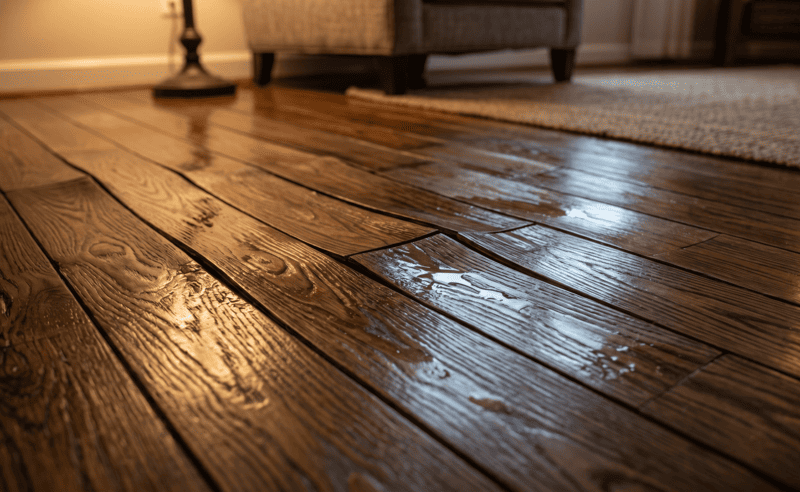
Hardwood flooring is among the most sensitive materials in a home when it comes to moisture. Solid hardwood absorbs water quickly, and as the wood cells take on moisture they swell — causing planks to cup, crown, or buckle depending on where the moisture is concentrated. In Honolulu’s already-humid climate, hardwood floors are under baseline moisture stress year-round, which means a water event pushes them past their tolerance threshold faster than in drier climates. The encouraging reality is that hardwood floors that are dried promptly and thoroughly — using professional structural drying equipment rather than fans and open windows — can often be saved. Floors that remain wet for more than 24 to 48 hours, however, begin to suffer permanent distortion, and the subfloor beneath them is absorbing moisture throughout that same window. Engineered hardwood behaves somewhat better than solid wood in short-duration events but is similarly vulnerable to prolonged exposure and to moisture wicking up from a wet subfloor.
Carpet presents a different set of challenges. The carpet fiber itself can often be cleaned and dried successfully if the response is rapid, but the padding beneath it acts as a sponge — retaining water long after the surface feels dry to the touch, and becoming a breeding ground for mold and bacteria within 24 to 48 hours in warm conditions. In most water loss scenarios, carpet padding must be removed and discarded even when the carpet itself is salvageable. MD Restoration’s professional carpet cleaning and water extraction team has the equipment to extract water from carpet, assess whether the material is restorable, and remove and dispose of contaminated padding safely. Laminate flooring, by contrast, is almost never salvageable after significant water exposure — the composite core swells irreversibly when wet, and attempting to dry it in place typically results in a warped, uneven surface that must be replaced regardless.
Why the Subfloor Is the Real Priority
Homeowners understandably focus on the visible surface floor when dealing with water damage, but the subfloor beneath it deserves equal — and often greater — attention. In most Honolulu homes and condominiums, the subfloor is plywood or OSB (oriented strand board), both of which absorb moisture readily and can begin to soften, delaminate, or develop mold growth before the surface floor above shows any visible sign of a problem. A floor that feels springy or soft underfoot after a water event is often signaling that the subfloor has been compromised, and installing new flooring over a wet or mold-affected subfloor is one of the most common — and costly — mistakes made during DIY water damage repairs. Professional moisture mapping using thermal imaging and calibrated meters allows MD Restoration’s technicians to confirm exactly where moisture remains in the floor assembly before any drying is declared complete, ensuring that the structure beneath the new floor is sound. For water losses that require subfloor replacement or repair before new flooring can be installed, MD Restoration’s licensed general contracting team handles the full scope of work in-house.
Getting Your Floors Restored Before the Holidays
With Thanksgiving approaching and the holiday season just weeks away, many Honolulu homeowners are feeling real urgency about restoring their living spaces after storm-related water intrusion. The good news is that rapid professional intervention dramatically improves outcomes across every flooring type — and in many cases allows restoration rather than full replacement. The key is not waiting. Every additional hour that flooring materials remain wet narrows the window for successful drying and increases the likelihood that mold establishes itself in the subfloor, the wall base, and the adjacent wall cavities. MD Restoration’s emergency water extraction team is available 24 hours a day, seven days a week throughout Oahu, and we work with all insurance providers to document losses and support your claim from the first call through project completion. If your Honolulu home has water damaged flooring from a recent storm or plumbing event, call us any time at (808) 528-3434 — we are ready to help you get your home back before the holidays.

