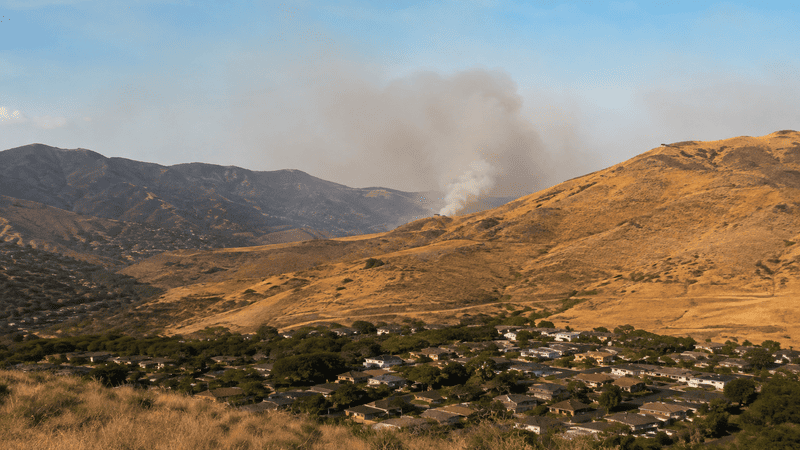
Summer in Honolulu means dry trade winds, browning hillsides, and a noticeable drop in rainfall that lasts through the fall. It also means Oahu’s wildfire risk climbs sharply. Hawaii’s 2023 Maui wildfires changed how the entire state thinks about fire danger, and that awareness has rightly extended to Oahu, where dry brush, grassy slopes, and wind corridors in areas like Nanakuli, Waianae, and the hillsides above Kalihi and Salt Lake create real exposure during the summer dry season. A wildfire doesn’t have to reach a neighborhood directly to cause damage — wind-carried embers, smoke infiltration, and heat exposure can affect homes well outside the immediate burn area.
Why Oahu’s Dry Season Is a Genuine Fire Risk
Unlike mainland wildfire zones, Oahu’s risk isn’t driven by forest fuel loads — it’s driven by invasive grasses. Non-native guinea grass and other fast-growing vegetation dry out completely during the summer months and burn extremely fast, often faster than firefighters can contain in steep or hard-to-access terrain. Combined with strong trade winds and, occasionally, dry Kona wind events, a small ignition — a discarded cigarette, a vehicle spark, an unattended grill — can spread into a fast-moving brush fire within minutes.
Homes closest to grassy or undeveloped hillsides carry the highest direct risk, but smoke damage and ash infiltration can reach homes much farther away, especially when trade winds are pushing smoke through a valley or neighborhood.
How Honolulu Homeowners Can Reduce Their Risk
1. Create defensible space. Keep vegetation trimmed back at least 5 to 10 feet from your home’s exterior walls, and clear dry grass, leaves, and debris from under decks, lanais, and along fence lines. Dead or overgrown landscaping close to the house is one of the most common ways fire spreads onto a structure.
2. Clear gutters and roof debris. Dry leaves and organic debris in gutters and on rooftops can catch embers carried by wind, even when the fire itself is a considerable distance away. This is a quick seasonal check that takes an afternoon and meaningfully reduces risk.
3. Check attic and vent screening. Embers can enter a home through unscreened attic vents, soffit vents, and gaps around rooflines. Ember-resistant vent screening is a relatively low-cost upgrade that closes one of the most common entry points for fire.
4. Store flammable materials away from structures. Propane tanks, gasoline, mulch piles, and stacked firewood should be kept well away from the house and any outbuildings, particularly during the driest months.
5. Know your evacuation route and have a go-bag ready. Fire risk on Oahu can escalate quickly with wind. Knowing your route in advance, and keeping important documents, medications, and essentials ready to grab, removes a critical delay if evacuation becomes necessary.
Smoke Damage Reaches Further Than the Fire Line
One of the most misunderstood parts of wildfire exposure is that a home doesn’t need to burn to sustain real damage. Smoke particles infiltrate HVAC systems, soft furnishings, drywall, and insulation, leaving behind odor and residue that doesn’t resolve on its own, even after the air outside clears. Homes downwind of a brush fire — sometimes miles away — can end up with smoke odor embedded throughout the interior, along with a fine layer of ash that settles on roofs, in gutters, and around HVAC intake vents.
If your home was exposed to nearby smoke or ash, even without direct fire contact, it’s worth having it professionally assessed. Smoke residue is acidic and can continue causing damage to surfaces and finishes long after the smell fades from the air.
What to Do If Fire or Smoke Reaches Your Home
- Don’t turn on your HVAC system until it’s been checked — running a smoke-contaminated system recirculates residue throughout the house.
- Avoid wiping down soot or ash with household cleaners before assessment, as this can grind particles into surfaces and make removal harder.
- Photograph visible damage for insurance purposes before any cleanup begins.
- Call a restoration company experienced in fire and smoke remediation as soon as it’s safe to return home.
MD Restoration Handles Fire and Smoke Damage From Start to Finish
MD Restoration is an IICRC Certified Firm and licensed general contractor serving Honolulu and Oahu, with experience handling everything from smoke odor removal to full structural fire damage repair. Because we hold both restoration and general contractor licensing, we’re able to manage a fire damage claim from the initial assessment through final rebuild, without handing the project off between multiple companies.
If your home has been affected by fire, smoke, or ash — whether from a direct fire event or a nearby brush fire — call MD Restoration 24 hours a day, 7 days a week at (808) 528-3434, or visit our contact page to schedule an assessment.

