
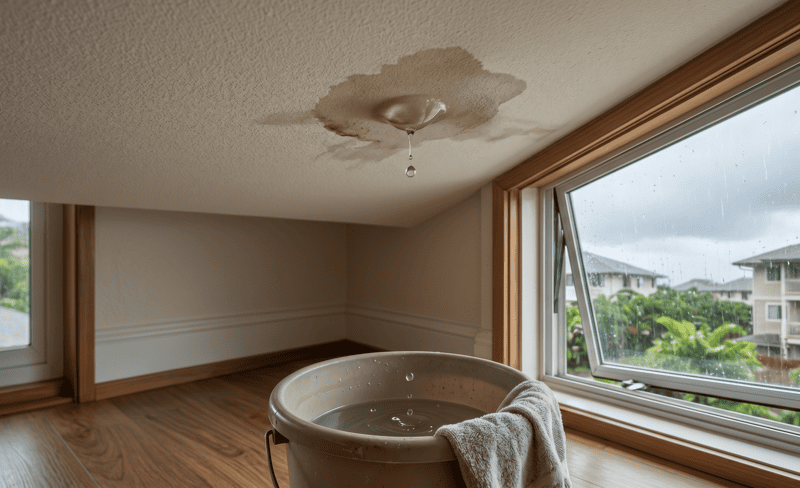
November marks the beginning of Honolulu’s rainy season, and for many Oahu homeowners, the first heavy storm of the year is also the first sign that their roof has a problem. Roof leak water damage in Honolulu homes is especially common at this time of year, when weeks of dry trade-wind weather give way to sustained frontal rain and Kona storms that push moisture horizontally into vulnerabilities that sunshine never reveals. A small breach in flashing, a cracked ridge cap, or a section of aging underlayment that looked fine from the ground can suddenly allow water to enter a home and travel silently through the structure — often for hours before it shows up as a stain on the ceiling or a drip onto the floor.
How Roof Leaks Spread Inside a Home
What makes roof leak damage particularly deceptive is the distance water can travel between entry point and appearance. When rain penetrates the roof assembly, it saturates insulation batts and runs along rafters and ceiling joists before dripping down — which means the visible wet spot on your ceiling is rarely directly below the actual breach in the roof. Water also pools above drywall and above lay-in ceiling tiles, adding weight and saturating the material long before it breaks through. By the time a homeowner in Honolulu notices a bulging ceiling or a growing stain after a storm, the total volume of water that has entered the assembly is often far greater than what is visible. The same is true for walls near rooflines — water that enters around compromised flashing or deteriorated window head caulking can run inside a wall cavity all the way to the floor before anyone realizes it is there.
This hidden saturation is what transforms a seemingly minor roof leak into a significant remediation project. Wet insulation loses its thermal value and retains moisture for extended periods, creating sustained dampness in concealed spaces. In Honolulu’s warm climate, that moisture — combined with the organic material in drywall and wood framing — creates near-ideal conditions for mold growth, which can establish itself within 24 to 48 hours of a moisture event. Addressing the visible stain without confirming that the structure behind it has been fully dried is one of the most common mistakes homeowners make after a roof leak, and it often leads to mold discoveries weeks or months later. MD Restoration’s professional mold remediation team uses containment and remediation protocols specifically designed for post-leak scenarios where mold has had time to establish in concealed areas.
The Right Way to Respond After a Rainy Season Roof Leak
When you discover water intrusion from a roof leak, the first step is to protect the interior as best you can — placing buckets, laying down towels or plastic sheeting, and moving furniture and valuables away from the affected area. If a ceiling appears to be bulging with pooled water, carefully puncturing it in a controlled spot can relieve the buildup and prevent a sudden collapse, but this should only be done when you can safely manage the water release. Once the immediate emergency is contained, the priority shifts to professional water extraction and structural drying. Surface drying alone is not sufficient — the insulation above the ceiling, the drywall itself, and the framing members that absorbed moisture all need to be assessed and dried to industry standards. MD Restoration’s emergency water extraction services are available 24 hours a day throughout Oahu, and getting certified technicians on-site quickly after a storm event is the most effective way to limit the total scope of damage.
It is also worth having the roof itself assessed as soon as conditions allow, but do not wait for roof repairs to begin interior drying — the two processes can run in parallel, and delaying the drying process while waiting for a roofer significantly increases the risk of mold and structural deterioration. Once the affected areas have been fully dried and any mold addressed, the repair and rebuild phase can begin. Replacing damaged drywall, repairing ceiling texture, repainting, and restoring any flooring or trim that absorbed water are all part of a complete restoration. MD Restoration’s licensed general contracting team handles this phase in-house, so Honolulu homeowners work with one trusted company from emergency response through finished repair rather than coordinating multiple separate contractors.
Don’t Wait Out the Rainy Season With Unresolved Water Damage
Honolulu’s rainy season runs through March, which means a roof leak that enters a home in November has five months of recurring rainfall ahead of it if the interior damage is not properly addressed. Each subsequent storm event adds moisture to an already compromised assembly, compounding the damage and increasing the likelihood that mold becomes a significant secondary issue. If your Honolulu home has experienced roof leak water damage — or if you noticed staining, soft spots, or musty odors after recent rains — call MD Restoration any time at (808) 528-3434. We are available around the clock and ready to help you protect your home before the next storm arrives.

