
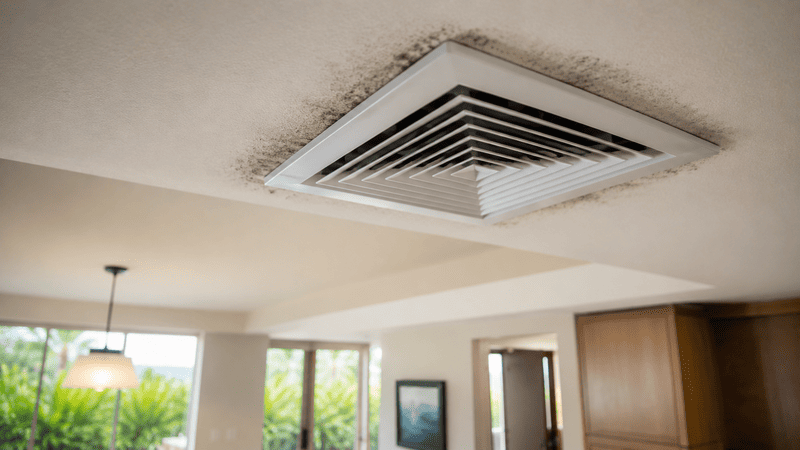
July is peak humidity season in Honolulu, and it’s also the time of year when homes are sealed up tighter than usual — windows closed, AC running constantly, and less natural airflow moving through the house. That combination, while comfortable, creates one of the most common and least visible mold triggers of the year: condensation and moisture buildup inside and around air conditioning systems. Unlike a burst pipe or a roof leak, this kind of moisture problem doesn’t announce itself. It builds quietly over weeks, often going unnoticed until there’s a musty smell, a spike in allergy symptoms, or visible growth around a vent or ceiling.
Why AC Systems Are a Mold Risk in Hawaii’s Climate
Air conditioning units cool warm, humid air, which naturally produces condensation. In a properly maintained system, that condensation drains away through a dedicated line. But in Honolulu’s climate — where outdoor humidity regularly sits well above 70% in summer — even small maintenance issues can turn a normal AC system into a consistent moisture source indoors.
Common culprits include:
- Clogged condensate drain lines, which cause water to back up and pool around the unit or drip into ceilings and walls
- Poorly insulated ductwork, which allows condensation to form on the outside of ducts running through warm attic or ceiling spaces
- Oversized or improperly sized units, which cool the air quickly without adequately removing humidity, leaving indoor air more humid than it should be
- Dirty air filters and coils, which restrict airflow and can cause the evaporator coil to freeze and then drip excess water as it thaws
Any of these can introduce a slow, steady source of moisture into walls, ceilings, or flooring near the unit — exactly the conditions mold needs to establish itself.
Why This Type of Mold Growth Is Easy to Miss
Unlike water damage from a storm or a pipe failure, AC-related moisture problems are gradual. There’s no single event that prompts a homeowner to call for an inspection. Instead, the signs tend to show up indirectly:
- A musty odor near vents, especially when the AC first kicks on
- Water stains or discoloration on the ceiling below an attic-mounted air handler
- Increased allergy symptoms or respiratory irritation that improve when away from home
- Visible mold or discoloration around vent covers, especially in bathrooms or bedrooms with less airflow
- A noticeable increase in indoor humidity even with the AC running
Because these signs develop slowly, it’s common for homeowners to attribute them to something else — seasonal allergies, an old house smell, or simply “island humidity” — until the mold has had time to spread further into the surrounding structure.
Reducing Your Risk During Peak Humidity Season
1. Have your AC system serviced before mid-summer. A professional inspection can catch a clogged drain line or failing coil before it becomes a moisture problem inside your walls.
2. Check and replace air filters regularly. A clean filter keeps airflow consistent and reduces the chance of coil freezing and excess condensation.
3. Keep an eye on ceiling areas below attic-mounted units. Discoloration, even faint, is worth investigating before it spreads.
4. Run a dehumidifier in problem areas if needed. Bathrooms, closets, and rooms with limited airflow are especially prone to elevated humidity during summer months.
5. Don’t ignore a musty smell. In Honolulu’s climate, a persistent musty odor is one of the most reliable early indicators of hidden moisture, even before visible mold appears.
When It’s Time to Call a Professional
If you notice a persistent odor, visible discoloration near vents or ceilings, or a spike in allergy symptoms at home that doesn’t have an obvious cause, it’s worth having the area professionally assessed rather than waiting to see if it resolves on its own. Mold that’s had weeks to establish itself inside a wall cavity or above a ceiling isn’t something that surface cleaning fixes — and left alone, it typically continues to spread as long as the moisture source remains active.
MD Restoration Handles Mold From Inspection to Remediation
MD Restoration is an IICRC Certified Firm serving Honolulu and Oahu, with experience identifying and remediating mold caused by everything from storm damage to slow, AC-related moisture issues. If something in your home doesn’t feel right this summer — an odor, a stain, symptoms that improve when you’re away — call us 24 hours a day, 7 days a week at (808) 528-3434, or visit our contact page to schedule an assessment.

