Summer is when a lot of Honolulu homeowners finally start the renovation project they’ve been planning all year — a kitchen update, a bathroom remodel, pulling up old flooring, or opening up a wall for a new layout. It’s also, unfortunately, the time of year we see the most avoidable asbestos exposure incidents. A homeowner or a general contractor starts demo on a home built before the 1980s, disturbs a material nobody thought to test, and what should have been a straightforward project turns into a stop-work situation with health and legal implications neither side anticipated.
Why Older Oahu Homes Carry Real Risk
A large share of Honolulu’s housing stock was built before asbestos-containing materials were phased out of common use in the late 1970s and 1980s. That means homes across neighborhoods like Kaimuki, Manoa, Kalihi, and Palolo can still contain asbestos in places most homeowners wouldn’t think to check, including:
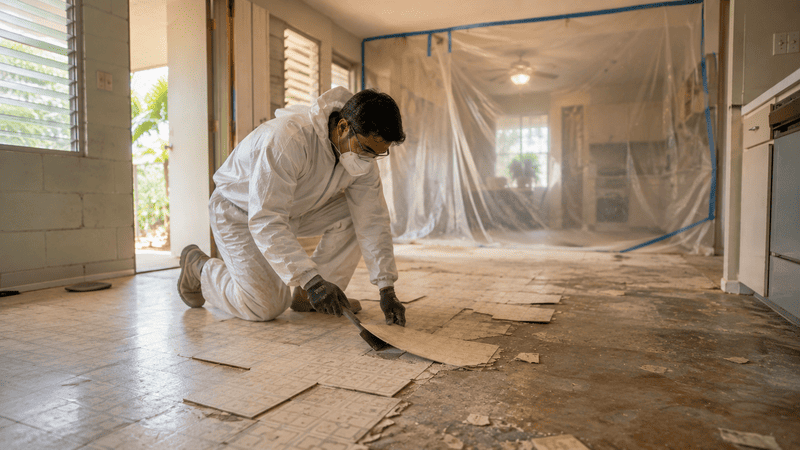
- Vinyl floor tile and the black adhesive (mastic) underneath it
- Popcorn or textured ceiling finishes
- Older insulation around pipes, boilers, and ductwork
- Certain types of drywall joint compound and texture coatings
- Roofing felt and some older siding materials
None of these materials are dangerous when they’re intact and undisturbed. The risk comes specifically from cutting, sanding, drilling, or demolishing them, which releases microscopic fibers into the air where they can be inhaled.
Why This Catches So Many Renovation Projects Off Guard
Asbestos doesn’t look dangerous. Old vinyl tile just looks like old vinyl tile. A textured ceiling just looks dated. There’s nothing about the appearance of these materials that signals risk, which is exactly why so many DIY renovations and even professionally contracted projects skip testing altogether — nobody thinks to ask the question until demo is already underway.
By the time a material is suspected to contain asbestos, it’s often already been disturbed. At that point, the conversation shifts from “how do we test this” to “how do we contain and safely remove what’s already in the air,” which is a more involved and more expensive process than testing would have been.
What Proper Testing Looks Like
Asbestos testing before a renovation is a straightforward process:
- Identify materials likely to be affected by the planned renovation — flooring, ceiling texture, insulation, or wall materials scheduled for removal or disturbance.
- Collect samples from those materials using proper containment procedures to avoid releasing fibers during sampling itself.
- Lab analysis confirms whether asbestos is present and at what concentration.
- Results guide the project plan — if asbestos is present, a licensed abatement plan is developed before any demo begins; if it’s not, the renovation proceeds as planned.
This process typically takes a matter of days, not weeks, and it’s a fraction of the cost and disruption of stopping mid-renovation to deal with an unplanned exposure.
What Happens If Asbestos Is Disturbed Without Testing
If asbestos-containing material is cut, sanded, or demolished without proper containment, the area needs to be treated as a contamination site until it’s professionally assessed and cleared. This typically involves:
- Sealing off the affected area to prevent fibers from spreading to the rest of the home
- Professional air quality testing to determine the extent of contamination
- Licensed abatement to safely remove and dispose of the contaminated materials
- Air clearance testing to confirm the space is safe before renovation resumes
All of this adds time, cost, and stress to a project that testing beforehand would have avoided entirely.
Before You Start Demo This Summer
If your home was built before the 1980s and your renovation plans involve removing flooring, ceiling texture, old insulation, or opening up walls, it’s worth having those materials tested before work begins. This is true whether you’re doing the work yourself or hiring a general contractor — many contractors will ask for asbestos clearance before starting work on an older home, and having it done in advance keeps your project on schedule.
MD Restoration Offers Licensed Asbestos Testing and Abatement
MD Restoration is a licensed asbestos contractor serving Honolulu and Oahu, offering testing, abatement, and clearance services for homeowners and contractors working on older properties. If you’re planning a renovation this summer and aren’t sure what your home’s older materials contain, call us 24 hours a day, 7 days a week at (808) 528-3434, or visit our contact page to schedule testing before demo day.

