Honolulu has one of the highest condominium ownership rates in the United States, and for good reason — condo living offers an accessible path to homeownership in one of the world’s most desirable places to live. But condo ownership also comes with a set of water and mold challenges that are fundamentally different from those facing single-family homeowners, and those differences matter enormously when mold appears. Mold remediation in a Honolulu condo is rarely as straightforward as calling a contractor and scheduling a cleanup. It involves shared building systems, questions about who is responsible for what, the potential involvement of a homeowners association, and the reality that moisture in a multi-unit building rarely respects the boundaries between individual units. As Honolulu’s rainy season winds down in March, condo owners across Oahu are discovering the mold that four months of wet weather quietly cultivated behind their walls — and many of them are navigating that discovery for the first time.
Why Condos Are Particularly Vulnerable to Mold Growth
The structural characteristics of multi-unit residential buildings create mold conditions that don’t exist in the same way in detached homes. Shared plumbing stacks mean that a leak originating in a unit two floors above yours can migrate through the building structure and appear as moisture damage or mold growth in your walls or ceiling without any fault or action on your part. Horizontal water migration through concrete slabs and along structural members is common in Hawaii’s older high-rise and mid-rise buildings, where decades of moisture cycling have created pathways through the building envelope that are difficult to detect and even harder to trace to a source. Common-area systems — irrigation lines, roof drainage, pool equipment, and shared mechanical rooms — are additional sources of moisture intrusion that can affect individual units through the building structure.
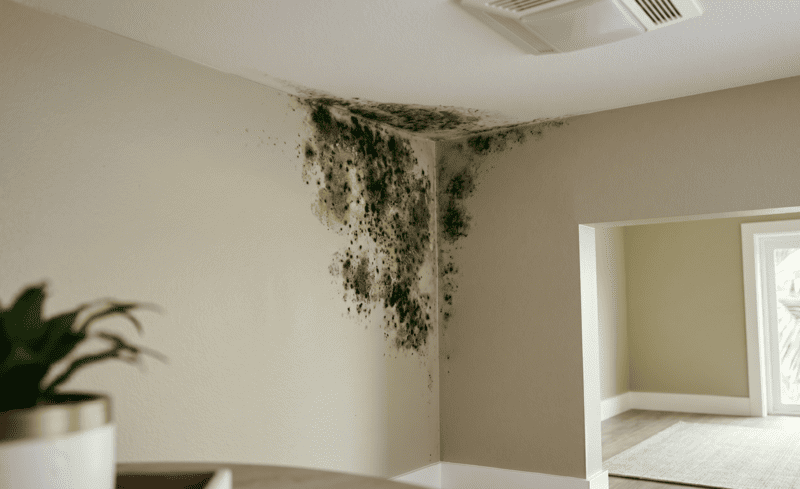
Honolulu’s climate amplifies all of these vulnerabilities. The combination of warm temperatures, sustained rainy-season humidity, and the limited air exchange that comes with closed windows during cooler or wet evenings creates interior conditions where mold can establish itself in wall cavities, behind baseboards, under flooring, and inside bathroom and kitchen walls within days of a moisture event. In condo buildings where units are rented out or used as vacation properties, those conditions can go unnoticed for weeks. By the time a musty odor or a visible stain prompts a call, the mold colony is typically well established and has often spread beyond the immediately visible area. MD Restoration’s professional mold remediation team uses containment protocols designed specifically for occupied multi-unit buildings, minimizing disruption to neighboring units while ensuring the full scope of growth is identified and addressed.
Navigating HOA Responsibility and Unit Owner Liability
One of the most common sources of confusion and conflict in Honolulu condo mold situations is the question of who bears responsibility for remediation costs — the unit owner, the homeowners association, or both. The answer depends on the source of the moisture, the specific language in the building’s CCRs and bylaws, and in some cases the terms of the individual owner’s insurance policy. As a general principle, moisture that originates from a building common element — the roof, the main plumbing stack, a shared mechanical system — is typically the HOA’s responsibility to address at the source, while the damage and remediation within the affected unit may fall to the individual owner’s insurance. Moisture that originates within a unit — a failed supply line, an overflowing fixture, a condensation problem caused by inadequate ventilation — is typically the unit owner’s responsibility from the source outward.
The practical reality is that these lines are often disputed, and the process of resolving them takes time that mold does not wait for. The most important action a condo owner can take when mold is discovered is to document the conditions thoroughly, notify the HOA or building management in writing, and engage a professional remediation contractor to assess the scope and source of the problem. That documentation and professional assessment becomes the foundation for any insurance claim or HOA cost-sharing conversation that follows. Because MD Restoration works with all major insurance providers and has extensive experience navigating the documentation requirements of multi-unit building losses, engaging our team early in the process protects both the owner’s health and their financial position. If the moisture source that drove the mold growth has not yet been fully resolved, our emergency water extraction and structural drying team can address active moisture conditions in parallel with the remediation assessment.
Getting Your Condo Ready for Spring
March is a natural inflection point for Honolulu condo owners — the rainy season is ending, real estate activity is picking up, and buildings are beginning to address the maintenance that accumulated over winter. For owners who have noticed musty odors, unexplained allergy symptoms, or visible discoloration on walls or ceilings over the past few months, now is the right time to have a professional assessment before those conditions progress further or affect a pending sale or rental. MD Restoration’s licensed general contracting team can also handle the post-remediation repairs — drywall replacement, painting, flooring restoration — that return a unit to its pre-mold condition after the remediation is complete. To schedule a mold assessment for your Honolulu condo or multi-unit property, call MD Restoration any time at (808) 528-3434. We have been serving Oahu’s condominium community for over two decades and understand the unique challenges that come with it.

