The holiday season brings a lot of warmth into Honolulu homes — candles on tables, string lights winding through garland, stovetops running for hours during family gatherings. It also brings a measurable increase in residential fire risk. December is consistently one of the highest months for home fire incidents nationwide, and Honolulu is no exception. What many homeowners don’t anticipate is that even a relatively contained holiday fire creates two problems simultaneously: the fire and smoke damage itself, and the water damage that follows — from suppression efforts, activated sprinklers, or firefighting operations. Understanding both sides of holiday fire damage is essential for any Honolulu homeowner who wants to protect their property and respond effectively if the worst happens.
Why the Holiday Season Raises Fire Risk in Honolulu Homes
The combination of factors that drives holiday fire risk is well established. Cooking fires are the leading cause of residential fires year-round, and they spike sharply in November and December when households are preparing larger meals, using unfamiliar equipment, and managing multiple burners and ovens simultaneously. Unattended stovetops and overheated cooking oil are responsible for the majority of these incidents. Decorative lighting adds another layer of risk — older or damaged string lights, overloaded extension cords, and lights left on overnight or while a household is away are all documented ignition sources. Candles, which are used far more frequently during the holiday season, are among the most preventable causes of residential fires when left unattended or placed near curtains, garland, or other combustibles.
In Hawaii, where many homes have open floor plans, louvered windows, and good airflow by design, a small ignition source can find favorable conditions for rapid spread. Homes and condominiums in Honolulu that were built before modern fire codes may also lack the sprinkler systems or fire-rated construction assemblies that help contain a fire in its early stages. The upside is that awareness and a few practical habits — keeping cooking areas clear, inspecting holiday lighting before use, and never leaving candles burning in an unoccupied room — eliminate the majority of holiday fire risk. But for incidents that do occur, a rapid and correctly sequenced response determines how much of the property can be saved.
The Water Damage That Comes With Every Fire
One of the most underappreciated aspects of fire damage restoration is the volume of water involved. A residential sprinkler system activation — even one triggered by smoke rather than actual flame — can discharge dozens of gallons per minute, saturating flooring, walls, cabinetry, and personal property in the time it takes for the system to be shut off. Firefighting operations introduce even greater volumes of water, often under high pressure that drives moisture into wall cavities, beneath flooring, and into ceiling assemblies throughout areas of the home well beyond the fire’s actual footprint. In Honolulu’s warm, humid climate, that water — if not extracted and dried professionally within the first 24 to 48 hours — creates ideal conditions for mold growth on top of the existing fire and smoke damage. MD Restoration’s professional mold remediation team works alongside the fire damage restoration process specifically to prevent secondary mold from compounding what is already a significant loss.
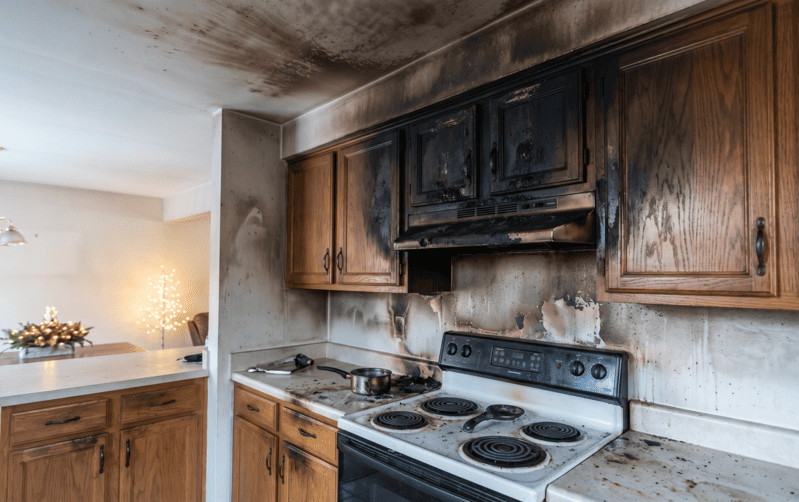
This is why fire damage restoration is never simply about cleaning up soot and char. The water component requires the same professional extraction, moisture mapping, and structural drying that any major water loss event demands. MD Restoration’s fire damage restoration services are designed to address both sides of a fire loss — the smoke, soot, and odor remediation alongside the complete water extraction and drying that suppression efforts leave behind — under one coordinated response rather than two separate contractor engagements.
What to Do Immediately After a Holiday Fire Incident
Once the fire department has cleared the scene and confirmed it is safe to re-enter, the clock starts on limiting secondary damage. Ventilate the space as much as possible to reduce smoke odor absorption into soft materials, but do not attempt to clean soot from walls or surfaces with household cleaners — improper cleaning can set stains permanently and spread smoke residue further into porous materials. Contact your insurance carrier promptly, document the damage thoroughly with photos before any cleaning or restoration begins, and call a certified restoration company to begin water extraction and assessment as soon as possible. MD Restoration’s 24/7 emergency water extraction team responds throughout Honolulu and Oahu at any hour, and arriving quickly after a fire incident — particularly one involving sprinkler activation or firefighting water — is critical to preventing the loss from expanding beyond the fire’s original footprint. If a holiday fire has affected your Honolulu home or property, call us any time at (808) 528-3434. We work with all insurance providers and are here to help you recover and get your home back to normal.

